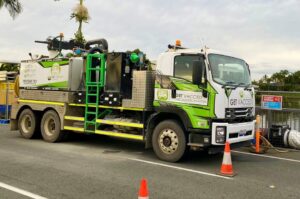
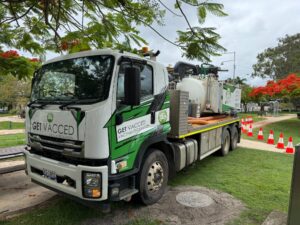
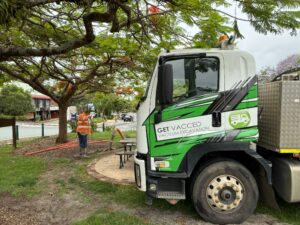
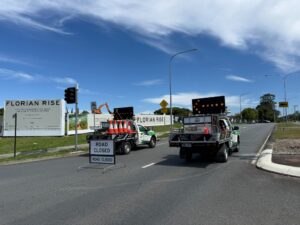
If there are pipes, cables or other services in the ground, you do not want to go digging blind.
Non-destructive digging gives the crew a more controlled way to expose what is actually there before the bigger excavation work starts.
On Brisbane sites, that can be useful for potholing, checking service depth, exposing crossings or simply getting a better look at what is below the surface before the next machine moves in.
Plans and markings are still important, but they do not physically show you what is sitting in the ground. That is where non-destructive digging can help.
What Is Non-Destructive Digging?
Non-destructive digging, often shortened to NDD, uses vacuum excavation to remove soil around underground services in a controlled way.
The aim is usually not to open up a huge area. It is to expose enough of the ground so the crew can confirm what is there and where it sits.
That can make it useful before trenching, drilling, excavation or other work around buried infrastructure.
Where Does It Make Sense?
| Site situation | Why NDD may help |
|---|---|
| Known underground services nearby | The crew can expose the service before larger excavation continues. |
| Potholing | A small section of ground can be opened to confirm depth or position. |
| Tight access | The truck may be able to stay further away while hose reaches the work area. |
| Busy commercial or civil site | Targeted excavation can help limit how much of the work area needs to be opened. |
Before the Dig Starts
The first step is understanding what is already known about the site.
If there are service plans, markings or information from earlier work, have those ready.
We also want to know where the excavation points are, what access looks like and whether the truck can get close to the work area.
If the site is tight, photos help. A narrow gate or awkward truck position is much easier to deal with before the crew turns up.
Our guide to vac truck access and hose distance covers the site setup side in more detail.
During the Excavation
The crew works through the target area to expose the service or section of ground that needs to be checked.
The point is control.
We are not trying to dig more than we need to. We are trying to see what is there, where it sits and what the next stage of the job needs to work around.
For some Brisbane projects, that may mean a few potholes. On others, it may mean exposing a crossing or section of service before trenching continues.
After the Service Is Exposed
Once the service is visible, the site team has something much more useful than a line on a plan.
They can see the actual position and depth and plan the next stage of work around that information.
That is often where the value of NDD really shows up. The excavation itself is only part of the job. The bigger benefit is giving the crew a clearer picture before more work begins.
How Does Hydro Excavation Fit In?
Hydro excavation is one way non-destructive digging can be carried out.
Water is used to loosen the ground, then the material is removed through the vacuum system.
If you want the full breakdown of that process, our guide to how hydro vacuum excavation works in Brisbane goes into it step by step.
What If the Ground Is Tight or Compacted?
Ground conditions can change how the job behaves.
Loose soil is one thing. Compacted ground, clay or wet material can be another.
If the site team already knows what the ground is like, tell us. Even a rough description can help us work out what to expect.
Does NDD Replace Mechanical Excavation?
Not always.
On many projects, NDD is used first to expose services or confirm what is in the ground, then mechanical excavation continues once the crew has better information.
There is no need to make a large open excavation harder than it needs to be.
If you are weighing up the two methods, our article on when vacuum excavation makes more sense than mechanical digging explains where each method can fit.
What If the Work Is Beside Traffic?
Roadside and driveway work needs more planning because the truck position can affect traffic and pedestrian movement.
If the vac truck needs to sit partly on the road or near a live access point, we want to know that before the booking date.
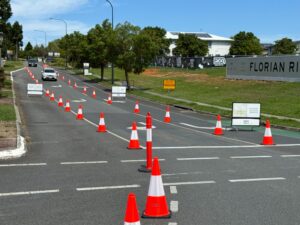
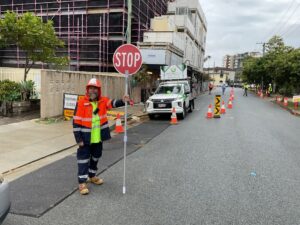
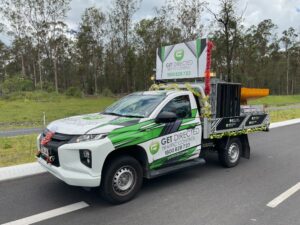
Where traffic control is needed, Get Group can coordinate traffic control alongside vacuum excavation work.
What Should You Tell Us Before the Job?
You do not need a technical report.
The useful stuff is simple:
- where the site is
- what needs to be exposed
- where the known or suspected services are
- roughly how deep the work may be
- what access looks like
- whether the job is close to traffic
If you have plans, markings or photos, send those through too.
If you are still working out whether vacuum excavation is the right method in the first place, our guide to when vacuum excavation makes sense for a project is a good next read.
Non-Destructive Digging FAQs
Is NDD the Same as Vacuum Excavation?
NDD is a common use of vacuum excavation. The focus is on exposing underground services or other buried infrastructure in a controlled way.
Is NDD Only Used for Potholing?
No. Potholing is common, but NDD can also be used to expose crossings, service runs and other targeted sections of ground.
Do I Still Need Service Plans?
Yes. NDD does not replace proper site information, markings or planning.
Can NDD Be Used on Tight Brisbane Sites?
Potentially. The truck may be able to stay further away and use hose to reach the work area, depending on the site layout.
Need to Expose Underground Services in Brisbane?
Tell us what needs to be exposed, where the site is and what you already know about the services in the area.
We can look at the access, ground conditions and work area and talk through whether non-destructive digging is a practical fit.
For service enquiries, visit our vacuum excavation service page or call 1800 828 723.